 Fulfilled
One Column Page
and responsive to boot
Evaluating N. T. Wright's Stance on Biblical Ages
by T. J. Smith
This article appeared in the 2026 Spring issue of Fulfilled! Magazine
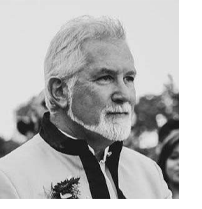
Greetings, you non-Texas goyim! You know, being a recording artist, I can still remember my first recording deal with Columbia Records back in ’89: “12 C.D.s for a penny, no further commitment!” (ba-dum, splash). Last month, I released my latest album project, and sales have already been certified “Pewter” level. Only 499,998 more and I’ll reach “Gold” status. Ok, enough ‘Dad Humor.’ The good news is that you can now download the album for FREE on the front page of my website (www.tjsmithministries.com), where you can also download a digital copy of my book “Kingdom Come” for $1 or the paperback for a little more, along with all of my books. Now, back to the salt mines.
This Age and the Age to Come
I need to deal with one reason why we struggle with biblical understanding. One of the most brilliant theologians alive is N. T. Wright. This guy is scary smart! I have the utmost respect for the ‘amount of study’ he has invested in understanding Scripture, and because of that respect, I must hold him accountable for what he has written about these two ages.
Example 1: “One of the central ways of expressing this hope [of Israel] was the division of time into two eras: the present age and the age to come. The present age was a time when the creator god seemed to be hiding his face; the age to come would see the renewal of the created world. The present age was the time of Israel’s misery; in the age to come she would be restored [TJ: a Zionist belief]. In the present age wicked men seemed to be flourishing; in the age to come they would receive their just reward. In the present age even Israel was not really keeping the Torah perfectly, was not really being YHWH’s true humanity; in the age to come all Israel would keep Torah from the heart (N. T. Wright, “The New Testament and the People of God,” pp. 299-300).
In Mr. Wright’s defense, I wasn’t sure when I first read this if this was his actual opinion or if he was simply explaining the Jewish belief. Here is a clear understanding of his opinions from his book “Surprised by Hope” (p. 139):
“Nor will it do to say, as do some who grasp that part of the point but have not worked it through [TJ: N. T.’s slight against preterism], that the events of A.D. 70 were themselves the second coming of Jesus so that ever since then we have been living in God’s new age and there is no further coming to wait [TJ: yep, he’s a true Zionist]. This may seem to many readers, as indeed it seems to me, a bizarre position to hold, but there are some who not only hold it but also eagerly propagate it and use some of my arguments to support it” [TJ: another backhand slap at preterists, but with an English accent].
What N. T. clearly said was that he does not believe we are living in God’s “new age.” Therefore, the only logical conclusion is that he feels we are still living in the same age as the first-century Jews, still under Torah, and still awaiting a Messiah. Question: Isn’t that the real “bizarre position to hold,” as Wright wrote? According to one of the century’s most ardent scholars, God is not our God . . . yet, and we are not His people . . . yet, even as Scripture screamed loudly that when the old covenant ceased and the new began, that would be the result! Paul wrote about this repeatedly. The real Israel was the New Jerusalem coming down from God. She is our mother, not the fleshly mother of the Torah/Law. Paul couldn’t have written any more clearly to those who were reading with the right lenses on (hint hint). The author of Hebrews also made it plain when it was written that the way to the “Most High” place could not be accessed while the earthly temple stood. Therefore, access to God’s presence was granted in AD 70 when that shadow of God’s dwelling place was cast away like Ishmael and replaced with the ‘mystery’ that Paul described as “God within.” Christ is the temple; we are in Christ; we became the temple.
This could not have happened if we are living in the “this age.” Don’t think I am beating up on Mr. Wright (although I could take him down!), but every public figure of influence is subject to scrutiny. Lord knows our own Don Preston, Ed Stevens, William Bell, Mike Sullivan, David Curtis, and others get scorched weekly. So, I have no problem subjecting N. T.’s research to some good-old common sense, Scripture, and hermeneutics. Here is another quote from Wright in which he refers to Mark 13 and Luke 13, where Jesus prophesied the destruction of the temple and Jerusalem (which happened between AD 66-70):
“One of the main reasons, I suppose (TJ: scratching his head quizzically), why the obvious way of reading the chapter has been ignored for so long must be the fact that in a good deal of Christian theology the fall of Jerusalem has had no theological significance. This has meant not only that Mark 13 is found puzzling, but also that all the references to the same event elsewhere in the gospels - even where it stares one in the face . . . have been read as general as warnings of hellfire in an afterlife, rather than the literal and physical divine judgment through Roman judgment that we have seen to be characteristic of Jesus’ story” (“Jesus and the Victory of God,” Fortress Press, 1996, pp. 343-344).
I decided to underline the words that stuck out to me in his quote. My thoughts while reading this were,
“Really??? You suppose?? You know that the obvious way to read this passage is literal and physical?!! You know that it’s a fact that the Church has ignored the obvious meaning? You believe that the Church finds this passage puzzling because they place no value on Jewish historical events?”
If I could sit down with Mr. Wright over a spot of tea and crumpets, I would ask:
1. “How can you propagate these untruths that you admit you know are wrong?”
2. “How can you continue to ignore the obvious interpretation of this passage?”
3. “How can you continue to publish works and write volumes of theology ideas, knowing that you are the one guilty of placing no theological significance on the fall of Jerusalem, and therefore not reading the chapter in the most obvious way? Mr. Wright, here is what I ‘suppose’: It is you who ignores the obvious way of reading this passage, even when it stares you in the face, because you place no theological significance on the fall of Jerusalem, and that is why you cannot grasp the message of ‘the literal and physical divine judgment through Roman judgment that we have seen to be characteristic of Jesus’ story.’”
In the previous statement by N. T., he was correct about the destruction of Jerusalem having no theological significance in the modern Church. It is sad that the Church has ignored the importance of the Jewish Wars. But beyond that insight, Wright admits that it is difficult to understand, “even where it stares one in the face,” yet he continues to swallow his futurist-Zionist mantra like castor oil without once thinking that maybe he stumbled over something enlightening and inspiring: that Yeshua did EXACTLY what He said, when He said, and how He said He would do it, to THAT generation. Wright goes on to note that today's scholars, preachers, and laymen tend to read Jesus’ apocalyptic discourse on the Mount of Olives (Matthew 24, Mark 13, and Luke 21) as an account of the end of the space-time universe and Jesus’ downward travel to earth in a chemtrail-filled cloud.
But Wright rejects this view (fortunately) as being totally out of sync with the time and place of Jesus’ first-century ministry and points out in “The Resurrection of the Son of God” (the hardcover version, p. 209):
“We must...stress again: as far as the disciples, good first-century Jews as they were, were concerned, there was no reason whatever for them to be thinking about the end of the space-time universe… There was no reason, either in their own background or in a single thing that Jesus had said up to them at that point, for it even to occur to them that the true story of the world, or of Israel, or of Jesus himself, might include either the end of the space-time universe, or Jesus or anyone else floating down to earth. The disciples were, however, very interested in a story which ended with Jesus’ coming to Jerusalem to reign as king. They WERE looking for the fulfillment of Israel’s hopes, for the story told so often in Israel’s scriptures to reach its appointed climax. And the ‘close of the age’ for which they longed was not the end of the space-time order, but the end of the present evil age....”
Man, o’ man. The problem here is that N. T. already stated that we are still in the same “age” as the first century. He seems to convey two different viewpoints that make it hard to tell where he stands. Surely no person can be this brilliant and perceptive to the nuances of Scripture, yet unable to solve the puzzle. If Jesus was explaining that His first-century judgment “about to come” upon Israel was His divine “coming,” and if the believers all understood that as the “Second Coming” promised to them, then that was probably what it was.
The reason that these passages confound Wright and almost all 19th - 21st century theologians is that they approach the entire doctrine of eschatology from a presupposition that He MUST come back and that it MUST be physical. This is really the unorthodox view. For this doctrine to survive, it must have two “second comings,” which the Bible never referred to. The writer of Hebrews mentioned that God would “in those days” make a new covenant with Israel (which is spiritual now) and would be their God and they would be His people. If God has yet to create this new covenant that we think we’ve been enjoying for 2000 years, then He is not yet our God, and we are not yet His people. That new covenant was the “age to come.” Paul wrote that he and his fellow believers had been transferred from the kingdom of darkness into the kingdom of light. There was no mention of the “kingdom of dusk” in between.
In N. T.’s opinion, we are still paused somewhere in the middle. If N. T. believes that the “age to come” is future, then that means we are all still failing horribly under Torah. We have failed to keep the Law, to make the pilgrimages back to the holy land, and to make sacrifices.
Yet Paul wrote that true Jews were those who believed in Christ and kept Torah with their hearts. This was in the present tense then, meaning that Torah was being kept in the hearts of believers back then, signifying that the prophecies from the Old Testament were fulfilled.
If Mr. Wright is correct, that means:
1. God has not given His laws into our minds.
2. Yahweh has not written His laws on our hearts.
3. He is not our God.
3. We are not His people.
Only some future race of trans-human, chip-implanted, robotic believers will get to reap this wonderful blessing! Is there any pastor in the world preaching that message? Well, sadly there are some misguided teachers out there, and most theologians can’t tie the Scriptures together. N. T.’s views seem so clear and logical the way he lays them out, yet it seems that he is the only one struggling to reconcile them when they clearly stare him in the face.
Ok, class, here is a summary in 3rd grade English: There were two ages – the age that they lived in and the age that came. The “age to come” was going to happen when the Jewish Messiah would arrive and establish His eternal Kingdom. The time between these ages was called the “Great Day of Yahweh,” the event that would judge Israel. Therefore, all Jews living up to the 1st century lived in Olam Hazeh, Jesus came and transferred them into the Haolam Ha-ba, and the Great Day of the Lord occurred circa AD 70 when Messiah’s judgment came on Israel. At that point, Yeshua fully consummated His Kingdom.
Hebrews 9:8 speaks of “the Holy Spirit signifying by this [the sign to come] that the way of the Holy of Holies has not yet been made manifest as long as the first tabernacle is still standing” [‘this’ refers to the sign of the destruction of the temple]. As Scripture points out, man was unable to enter the Holy of Holies as long as that earthly temple remained (or had symbolic “standing”).
According to N. T. Wright, we are all still awaiting access to the Holy of Holies because we are still under the old covenant, left to scratch out works-oriented faith until God decides to write Torah on the hearts of some distant future generation. Let’s apply two illustrations to prove this point.
“Whoever may speak a word against the Son of Man it shall be forgiven to him, but whoever may speak against the Holy Spirit, it shall not be forgiven him, neither in this age, nor in that which is coming” (Matthew 12:32).
If “this age” is our life on earth right now, and if the “age which is coming” is only realized when we die and go to heaven, then why would Jesus even address the fact that blasphemy would not be forgiven in heaven? Who would anyone blaspheme in heaven?
If the “age to come” is when Jesus personally, physically comes back and sets up an earthly reign, why would anyone be blaspheming Jesus then? His purpose was supposedly to set things right, bring heaven to earth, to rid sin and boy bands for good, and to end wars, poverty, and hunger.
So, once again, why would He say that even with heaven on literal earth, blasphemy would not be forgiven? Won’t everyone be a believer? It’s “Route 66” logic. After a while, you run out of highway.
The correct interpretation of this phrase is that blasphemy would not be forgiven during the transition of the old Mosaic covenant and the birth of the Messianic new covenant. Bernard Ramm would probably agree that the “central truth” here is that Jesus bound Satan and began fulfilling the characteristics of His Kingdom.
It is imperative to grasp the problems with misinterpreting Scripture and failing to understand the cultural, linguistic uses. Now, go download my free album and buy a book! Follow me for more culinary tips! ♰
Comments:
Your honest review will help others in their search for truth. If you must leave a negative review please be gracious.
Rather, speaking the truth in love, we are to grow up in every way into him who the head, into Christ . . . .
(Ephesians 4:15)
We use "Disqus" commenting software. If you are not familiar with "Disqus," click here for more information. You don't need a Disqus account to post comments, however, without an account you won't be notified if someone responds to your post.